



Looking at a lineup of Pride Mobility products, the different sizes, shapes, and tire configurations stand out. Some tires are filled with air, while others are solid. Some are filled with foam, and others are perforated.
First, we’ll describe the two types of tires, then explain why different models require different setups.
Pneumatic Tires
Pneumatic tires are rubber tires filled with air. They provide better traction and a smoother ride than solid tires. Pneumatic tires are more efficient, allowing the vehicle to maximise speed and range. They also slip less and stop faster.
Because they are air-filled, pneumatic tires require regular maintenance. Users need to check air pressure and occasionally repair punctures. Pneumatic tires can be either tube-type, like a bicycle tire, or tubeless, like a car tire. If a tube-type tire is punctured, the tube can usually be replaced while reusing the rubber tire. Tubeless pneumatic tires may need full replacement if punctured.
Solid Tires
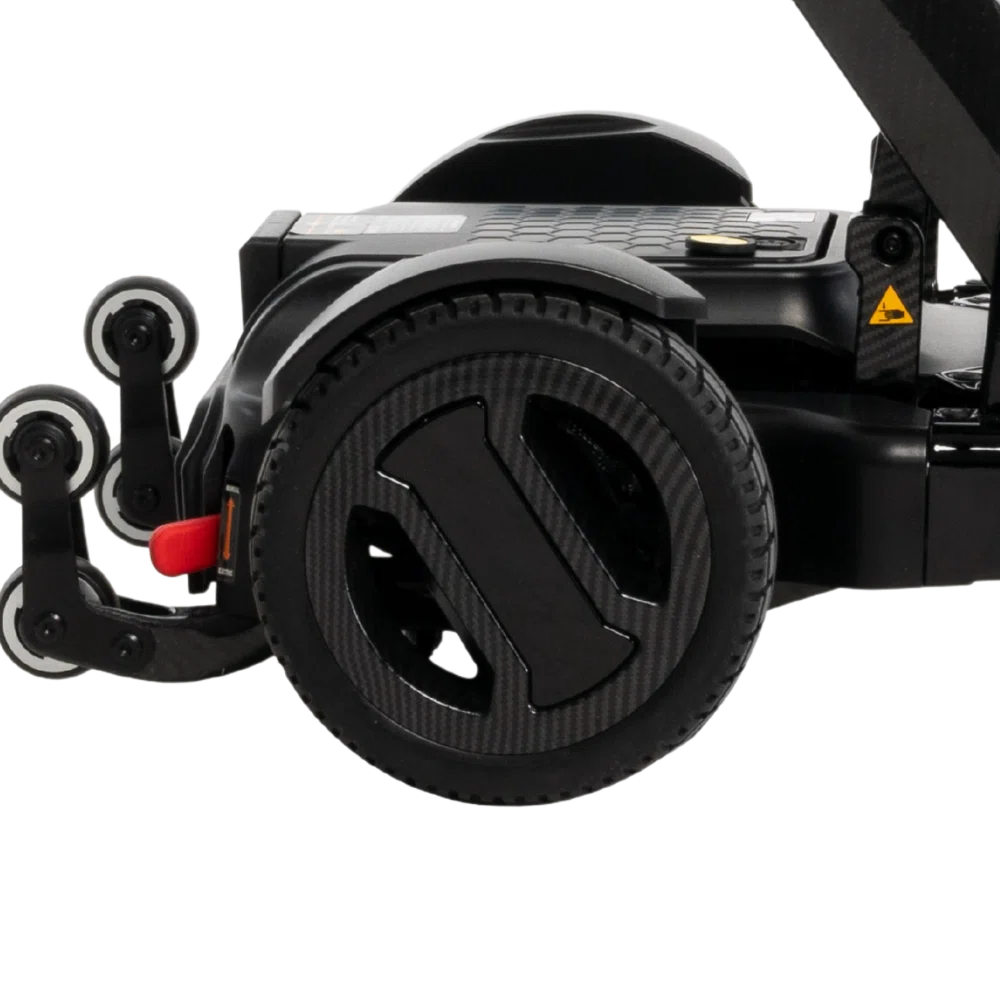
Solid tires are airless. They can be fully solid or filled with materials like polyurethane or foam. Most Pride Mobility devices use solid tires. These tires won’t go flat, so there’s no need for a tire gauge or air compressor. The low maintenance makes solid tires ideal for daily-use wheelchairs or scooters.
While solid tires have less cushioning than air-filled tires, the design of Pride devices often compensates with sturdy suspension or additional wheels.