
"*" indicates required fields
Take a look at our FAQ. We’ve got plenty of helpful tips and answers waiting for you.
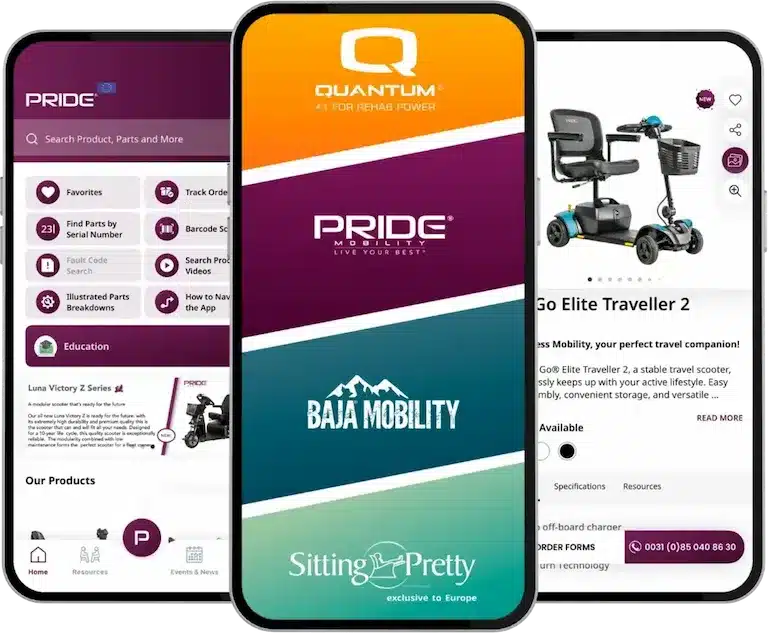
Are you a provider or clinician working with Pride Mobility and Quantum Rehab products? Say hello to PQ-365, your new, all-in-one digital companion. Designed to streamline your workflow and boost efficiency, this free mobile app brings the full Pride and Quantum product universe to your fingertips.
PQ-365 replaces the previous Quantum Clinician app, combining all essential resources for Pride Mobility and Quantum Rehab users into a single, user-friendly platform. Whether you’re on-site, in the clinic, or on the go, PQ-365 keeps everything you need within reach.
PQ-365 serves as a central knowledge hub, going beyond basic tools to become a single point of reference for product specs, order processing, troubleshooting, and training. Its intuitive interface and powerful features save time and simplify workflows for busy professionals.
The latest update brings exciting new brand integrations:
PQ-365 is available for free on both the Apple App Store and Google Play.
Mobility scooters are becoming increasingly popular across Europe, offering freedom and independence to people with mobility challenges. If you are considering getting one, you might wonder whether a driving license is required.
The simple answer is no: you do not need a driving license to use a mobility scooter in the EU. However, there are important rules and guidelines that vary slightly between countries. Understanding the general regulations and safety recommendations is essential.
In most European countries, mobility scooters are grouped into two general categories:
Low-speed scooters: Designed for pavements and pedestrian areas, usually with a maximum speed of around 6–7 km/h. These models are intended for use alongside pedestrians and cannot be used on regular roads, except when crossing.
Road-legal scooters: More powerful models that may reach speeds of 10–15 km/h. These scooters can often be used on both pavements (at reduced speeds) and roads, depending on national laws. They are usually equipped with lights, reflectors, and a horn for safety.
Always check the specific classification rules in your country, as requirements can differ.
No driving license needed: In the EU, mobility scooters are treated as assistive devices, not motor vehicles.
Minimum age: Some countries set a minimum age (often 14 or 15) for using larger road-legal scooters.
Traffic rules: Even though you do not need a license, you must follow traffic signals, signs, and speed limits when using a scooter on roads or pavements.
Familiarising yourself with your country’s equivalent of the traffic code is highly recommended to ensure safe use.
Formal training is not mandatory in most EU countries, but learning how to operate a mobility scooter safely is important. Local disability organisations or mobility scooter suppliers sometimes offer training sessions, which typically cover:
Basic controls and functions
Pavement driving skills
Road safety skills (for larger scooters)
Rules, tips, and supervised practice
Training is especially helpful for first-time users or those planning to use a road-legal scooter.
Cycle lanes or bus lanes: In most EU countries, mobility scooters are not permitted in cycle or bus lanes, as they may obstruct traffic.
Main roads: Some countries allow road-legal scooters on certain roads, but use on high-speed roads or motorways is usually prohibited. If you are permitted to drive on larger roads, additional safety equipment like lights or reflective vests may be required.
Shops and public buildings: Yes, mobility scooters are allowed in supermarkets, shops, and public buildings. By EU law, public spaces must be accessible to people with disabilities. Larger scooters may be harder to navigate indoors, so some shops provide parking areas.
You do not need a driving license to operate a mobility scooter anywhere in the EU. Still, it is important to understand your country’s specific rules, follow traffic regulations, and practice safe driving. With the right knowledge and training, mobility scooters provide an excellent way to enjoy independence and mobility in everyday life.
If you are considering buying a mobility scooter, you probably have plenty of questions. What type is right for me? What size scooter do I need? Which accessories should I choose? And if you’ve just received your brand-new scooter, you are most likely already thinking about where your first trip will be and how your new scooter will improve your independence and quality of life.
But alongside the exciting parts, there are also more practical questions to consider. One of the most common is: Do you need insurance for a mobility scooter?
In most of Europe, there is no legal requirement to insure a mobility scooter. Mobility scooters are generally classified as medical or assistive devices, not as motor vehicles. This means they are not subject to the same insurance laws as cars or motorbikes.
Both Class 2 scooters (up to 6.4 km/h, designed mainly for pavement use) and Class 3 scooters (up to 12.8 km/h, suitable for road use in some countries) typically do not require compulsory insurance. However, regulations can vary slightly between EU member states, so it is always wise to check local requirements.
Even though it isn’t a legal requirement, many people choose to insure their mobility scooter for peace of mind. A good insurance policy can provide:
Breakdown cover – Assistance if your scooter stops working while you are out.
Accidental damage protection – Repair costs if your scooter is damaged.
Theft cover – Financial protection if your scooter is stolen.
Third-party liability – Protection if your scooter accidentally causes damage or injury.
Having insurance can help you avoid unexpected costs and ensure you stay mobile, even if something goes wrong.
The cost of mobility scooter insurance depends on the provider, the type of cover, and your circumstances. As a general guide, policies are often very affordable compared to traditional motor insurance, usually priced at a modest annual premium.
All Pride Mobility scooters are designed to meet EU regulations, with a maximum speed of 12.8 km/h and weight limits suitable for both Class 2 and Class 3 categories. This ensures you can enjoy freedom and independence while remaining within legal guidelines.
If you are looking for a mobility scooter, explore our full range at Pride Mobility. Our scooters are built for comfort, safety, and reliability. Helping you move with confidence every day.
Managing orders can often feel like a boring or stressful task, especially when you are waiting for multiple mobility scooters or parts. But not anymore! We’re excited to introduce a brand-new feature that makes order tracking simple and efficient. Say hello to the new tracking tool on PQ-365.
This innovative tool allows you to check the status of your mobility scooter and parts orders quickly, using only your order number. In this post, we’ll explain what each order status means and how you can take advantage of this feature for a seamless experience.
Understanding your order status helps you know exactly where your order is in the process.
Ready to be Picked
Your order has been received and processed but has not yet been handed to the warehouse team. At this stage, it may still be waiting for payment verification or stock confirmation.
Being Picked
Our warehouse team is actively preparing your order for dispatch. Items are being collected and packed with care, ready to be shipped.
Shipped
The most exciting stage—your order has been dispatched and is on its way to you! Delivery times vary depending on location and carrier, but you can expect your items soon. If you experience delays, contact us for support.
Tracking your orders is simple with PQ-365:
Log in to your PQ-365 account.
Enter your order number.
View the current status of your order in real time.
A full step-by-step guide is available in the app to help you get started.
PQ-365 offers more than just order tracking. Here are some other helpful tools available:
View Parts Numbers
Easily keep track of all part numbers. If you need login details, contact us for support.
Access Product Information
Browse product specifications, brochures, and owner’s manuals—all in one place.
View Colour Options
Show all available colour options to your customers with a simple tap.
Digital Order Forms
Make ordering powered wheelchairs faster and more accurate with our digital forms.
If you have any questions or need assistance, please contact us. Our team is always happy to help you make the most of PQ-365.
Happy tracking!
When you purchase a mobility scooter, one of the first questions you might have is: Where am I allowed to ride it? Knowing the rules is important, not only to keep yourself safe, but also to ensure the safety of others around you. Let’s take a closer look at whether mobility scooters are permitted on the road and what regulations apply.
You do not need a driving licence to ride a mobility scooter. Mobility scooters are considered assistive medical devices rather than motor vehicles, as they are not heavy or fast enough to fall under the same category as cars or motorcycles.
Most large Pride Mobility scooters fall under Class 3 regulations, meaning they can be used on both pavements and certain roads. Always check the specifications of your scooter model for details such as maximum weight and speed.
Class 2 Mobility Scooters
Maximum speed: 6,4 km/h
Designed for pavements, shopping areas, and pedestrian spaces
Can only be used on roads when crossing from one side to another
Class 3 Mobility Scooters
Maximum speed: 12,8 km/h (on the road)
Limited to 6,4 km/h when driving on pavements
Must include features such as good brakes, lights, reflectors, and indicators to be road-legal
Class 3 scooters give you the flexibility to travel on the road when needed, while still being suitable for pavement use at lower speeds.
While Class 3 scooters can be used on some public roads, they are not permitted on motorways or high-speed expressways. On busy multi-lane roads, use is strongly discouraged, even if local law allows it. Safety should always be the first priority.
In some areas, scooters may be allowed on wider roads when fitted with appropriate lighting or reflective equipment, but it is always advisable to stick to quieter streets, cycle-friendly paths (where permitted), and pavements when possible.
Mobility scooters are electrically powered and designed as assistive devices. Because of this, they are exempt from vehicle taxes and emissions charges across most EU countries.
Mobility scooters are designed to give you greater independence and confidence in your daily life. Whether you’re navigating pavements, shopping centres, or local roads, always follow local traffic rules, keep to safe speeds, and make sure your scooter is equipped with working lights and reflectors.
At Pride Mobility, we offer a wide range of Class 2 and Class 3 mobility scooters, designed to meet EU standards for comfort, safety, and reliability. Explore our collection today and find the perfect scooter to match your lifestyle.
Mobility scooter accessories enhance your freedom, comfort, and safety while using your scooter. They can help you stay warm and dry, carry heavier loads, protect your scooter from the elements, and personalise your mobility device to suit your lifestyle.
It’s important to select accessories supplied or approved by the manufacturer. These are designed to integrate safely with your scooter without affecting performance. While personalising your scooter can be fun, ensure any third-party additions are fitted securely to avoid hazards such as trailing wires or loose attachments.
Comfort: Cushions and backrests can reduce pressure and protect against sores or discomfort during long rides.
Weather Protection: A rain cover protects you from wet weather and excessive sun exposure, keeping you comfortable in all conditions.
Medical Equipment: If you rely on essential medical devices like oxygen tanks, holders for these attachments are vital for safety and accessibility.
Walking Aids: Cane or stick holders keep mobility aids within easy reach while travelling safely.
Integrated storage compartments are standard on most mobility scooters, carefully designed to maintain balance and stability even when carrying heavy loads. Additional rear baskets are available for extra storage, allowing you to carry shopping or personal items safely and conveniently.
Safety accessories are essential for both your protection and the safety of others:
Horns, lights, and reflectors improve visibility and alert others to your presence.
Attention-grabbing items, such as reflective stickers or flags, help ensure you are seen in busy or low-light environments.
Batteries are central to mobility scooter use, so it’s important to have equipment to maintain your scooter’s operation:
Ensure batteries are fully charged before use.
Consider keeping a spare set of fully charged batteries to avoid unexpected interruptions.
Accessories should make your mobility experience easier and more enjoyable. Whether it’s comfort, storage, or safety, the right combination of accessories ensures your scooter meets your individual needs. For specialised requirements, reach out to your supplier. They can help you find the best solutions.
Travelling during the holiday season can be exciting, but for individuals using mobility scooters, airports and busy public spaces may seem challenging. With the right preparation and a few helpful tips, travel can be smooth and enjoyable.
Advance Planning: Research your destination for accessibility features and contact airlines, airports, and accommodations to ensure they can accommodate your scooter.
Scooter Maintenance: Check battery charge, tyres, brakes, and any necessary repairs before travelling to prevent unexpected issues.
Early Arrival: Arrive early to allow time for security, boarding, and navigating the terminal without stress.
Accessibility Services: Inform your airline in advance to arrange assistance, including wheelchair support, priority boarding, and help through security.
Security Checkpoints: Notify security staff about your mobility scooter and follow their instructions for inspection.
Gate Transfers: For connecting flights, ask about assistance to move between gates safely and efficiently.
Transportation Options: Research accessible taxis, ride-sharing services, or shuttle buses at your destination.
Rental Mobility Equipment: If staying for an extended period, consider renting a mobility scooter locally.
Public Transportation: Check if trains, buses, or trams are scooter-friendly and equipped with ramps or lifts.
Pack Wisely: Carry essential items, including documents, medications, chargers, and personal necessities, in a bag attached to your scooter.
Stay Informed: Monitor flight updates via email, text, or airline apps to manage unexpected changes.
Patience and Communication: Politely communicate your needs to staff; most are happy to assist.
Relax and Enjoy: With preparation and a positive mindset, travelling with a mobility scooter can be comfortable and rewarding.
Travelling with a mobility scooter requires planning and awareness, but by following these tips, you can enjoy a smooth and memorable holiday experience.
Travelling with limited mobility can present unique challenges, but with preparation and knowledge, your journey can be comfortable, safe, and enjoyable. These tips will help users of mobility scooters, power chairs, and wheelchairs navigate travel with confidence.
Research accessible transportation options such as trains, buses, and trams that accommodate mobility devices.
Check that hotels, restaurants, attractions, and other venues are wheelchair-friendly.
Ensure your mobility device is in good working order before travelling.
Check battery charge, connections, and tyres or wheels for proper condition.
Follow pedestrian and road safety rules.
Wear bright or reflective clothing to increase visibility.
Carry an ID tag or medical alert bracelet with important medical information.
Bring cushions or pads for long journeys to reduce discomfort.
Take regular breaks to stretch muscles and prevent stiffness.
Check rail and bus services for accessible options and priority seating.
Consider railcards or travel discounts for disabled travellers when available.
Familiarise yourself with local taxi or ride-share services that accommodate mobility devices.
Fully charge batteries and ensure tyres or wheels are in optimal condition.
Use locks or secure storage when leaving your device unattended.
Focus on enjoying the experience of exploring new places.
With proper planning, accessibility awareness, and the right equipment, you can travel confidently and create lasting memories.
Travelling with limited mobility doesn’t have to be complicated. By following these tips, you can make your journey safe, comfortable, and hassle-free.
Maintaining your mobility scooter or power chair is essential to ensure long-term performance, safety, and enjoyment. Following a few simple care steps can help you get the most out of your device for years to come.
Regularly check your battery to ensure it is fully charged and in good condition before use.
Inspect for signs of wear, damage, or corrosion at connection points, which can affect efficiency.
Keep the terminals clean and free from dirt buildup.
Examine moving parts, including tyres, brakes, steering, and suspension, for wear or damage.
Replace worn components promptly to maintain safety and comfort.
Pay attention to structural elements to ensure your device remains in optimal condition.
Use warm water and mild soap for regular cleaning.
Avoid harsh chemicals or abrasives that could damage your device.
Take care around electrical components, ensuring no excess moisture or force is applied.
Inspect tyres regularly for cracks, wear, or damage.
Monitor tyre pressure to avoid uneven wear; overinflated or underinflated tyres can affect safety.
Replace tyres when necessary to maintain optimal traction and stability.
Schedule regular servicing to identify potential issues early.
Professional inspections help keep your mobility device safe, reliable, and performing at its best.
By following these simple steps, you can ensure your Pride Mobility scooter or power chair continues to deliver reliable performance and maximum freedom for years to come.
Get instant access to products, manuals, order tracking, and more with the PQ-365 app. Download the Pride Mobility app today.